From Beginner to Professional: How the Right Tools Shorten the Learning Curve
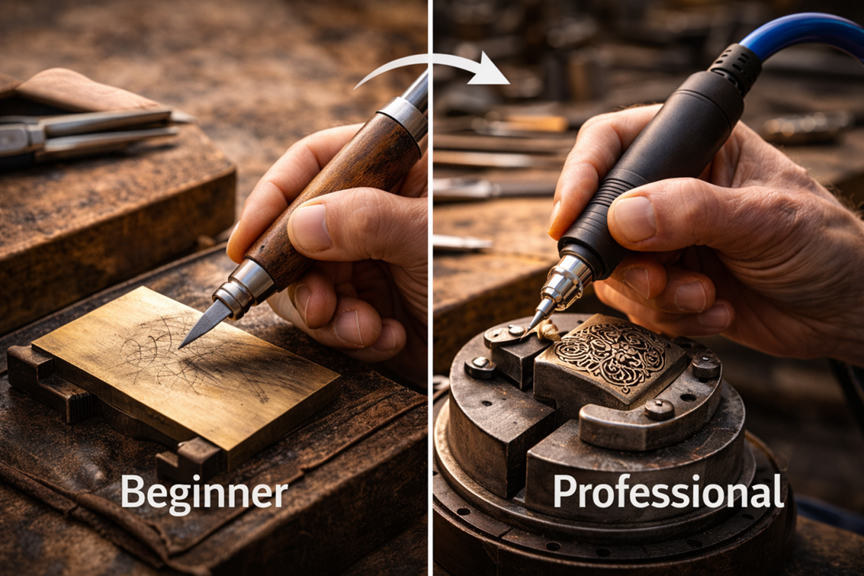
Every engraver remembers the early days. The hands were unsteady, the lines uneven, and the metal seemed to resist every movement. Progress felt slow, and mistakes happened often. Many beginners believed this struggle was a necessary part of learning—and to some extent, it was. But what most don’t realize is how much the choice of tools shapes that learning experience.
Skill develops through repetition, but repetition only works when the process itself is sustainable. When tools are too demanding, beginners spend more time fighting their equipment than learning the craft. This is where modern engraving tools quietly change everything.
Why Beginners Struggle More Than They Need To
Traditional engraving tools require precise pressure control from the very first day. For someone without developed muscle memory, this is extremely difficult. A line that starts clean suddenly dives too deep, or skips across the surface. The learner blames their hands, when in reality, the tool is asking for more than it should.
This early frustration causes many people to give up. Not because they lack talent, but because the learning curve feels unnecessarily steep. When progress is slow, confidence fades. When confidence fades, practice stops.
Learning Is Faster When Pressure Is Removed
A pneumatic engraver changes the learning process at a fundamental level. Instead of relying entirely on hand strength, the tool uses compressed air to deliver consistent cutting force. The beginner’s job is no longer to push the tool, but to guide it.
This allows new engravers to focus on direction, spacing, and rhythm—the true foundations of good engraving. Mistakes become less severe, lines become more predictable, and progress becomes visible much sooner.
When beginners see improvement early, they keep going. And when they keep going, skill follows naturally.
Why Early Success Matters More Than Perfect Technique
In the beginning, motivation is fragile. Small successes keep learners engaged. When tools help produce clean lines early, the brain associates practice with reward instead of frustration.
This is one of the most important advantages of pneumatic engraving systems. They do not make the craft easy, but they make it learnable. They replace discouragement with curiosity, and that shift changes everything.
How Intermediate Engravers Break Through Plateaus
Once the basics are learned, many engravers hit a plateau. They can cut clean lines, but their work feels limited. Designs stay simple because complex patterns require more control and endurance than the body can comfortably provide.
This is where better tools create a second wave of growth. Pneumatic engraving systems remove physical barriers, allowing engravers to explore shading, deeper cuts, and more ambitious compositions without exhaustion. Skill expands not because of more effort, but because effort is no longer wasted.
Why Professionals Rely on Pneumatic Systems
At the professional level, engraving becomes about consistency. Clients expect predictable quality, and projects require long working hours. This is where manual tools begin to fail, not in theory, but in practice.
Pneumatic systems provide reliable performance throughout the day. The last line of a project looks as clean as the first. This reliability is why professionals rarely return to purely manual tools once they switch.
Katway’s pneumatic engraver systems are especially noted for their stability and workshop-friendly design. They allow engravers to maintain quality without sacrificing comfort, even on demanding projects.
The Role of Tools in Confidence Building
Confidence comes from control. When engravers trust their tools, they work differently. They plan larger designs. They commit to longer cuts. They stop hesitating.
This psychological shift is often more important than technical improvement. When fear of mistakes disappears, creativity emerges. Tools become partners instead of obstacles, and engraving becomes expressive instead of cautious.
Why Better Tools Make Better Practice
Practice only works when it is consistent. If tools cause pain or fatigue, practice becomes irregular. Pneumatic engraving allows longer sessions without strain, which means skills develop faster and more evenly.
This is why many instructors now recommend pneumatic tools for students. Not because they replace learning, but because they support it.
Growing With Your Tools Instead of Outgrowing Them
One of the biggest mistakes beginners make is buying tools they will quickly outgrow. Katway’s pneumatic systems are designed to grow with the user, supporting beginners and professionals alike. As skills improve, the same tool continues to serve new techniques and more complex work.
This continuity is important. When tools stay consistent, learning stays focused. The engraver evolves, but the foundation remains stable.
Why the Learning Curve Is Not Just About Talent
Talent matters, but tools determine how that talent develops. When tools remove unnecessary difficulty, learning accelerates. When they reduce fatigue, practice becomes sustainable. When they increase control, confidence grows.
This is why the right tools do not just improve results—they change the entire learning journey.
Final Thoughts: The Right Tools Help You Become the Engraver You Want to Be
Every engraver’s path is different, but the obstacles are often the same: frustration, fatigue, and slow progress. The right tools remove these barriers, allowing skill to develop naturally instead of painfully.
From the first shaky lines to professional-level work, pneumatic engraving systems support growth at every stage. They shorten the learning curve, protect the hands, and encourage creativity. For anyone serious about mastering engraving, choosing the right tools early is not a shortcut—it’s a smarter path forward.
