Orlando’s Commitment to Road Safety: Protecting Drivers and Pedestrians
Key Takeaways
- Orlando implements ongoing infrastructure projects to enhance pedestrian and driver safety.
- Active community participation and targeted educational programs are central to promoting safer streets.
- Comparing data from other metropolitan areas highlights the positive impact and unique features of Orlando’s strategy.
Ensuring the safety of both drivers and pedestrians is a top priority for Orlando as the city continues to grow and its streets become busier. Taking strategic steps to keep all road users safe involves ongoing projects, policy reforms, and public engagement. With support from the city’s initiatives and experienced professionals like top Orlando car accident lawyers, Orlando strives to make roads safer for everyone.
Orlando’s approach to street safety is holistic. It combines smart infrastructure changes with community outreach and comparisons to national standards to ensure real results. Targeted improvements, education, and a steady response to evolving challenges are shaping the city’s progress toward creating a safer environment for drivers and pedestrians alike.
Current State of Road Safety in Orlando
Orlando has made significant progress in improving road safety through targeted projects aimed at reducing accidents and safeguarding pedestrians. A core strategy has been the FORWARD Orlando initiative, which focuses on rapidly addressing critical areas where pedestrian safety is most needed. These projects are centered on making quick-impact changes for at-risk areas throughout the city.
According to data published by major outlets such as Orlando News, the number of pedestrian incidents has increased, mirroring trends in other major Florida metros. However, Orlando has set itself apart by accelerating efforts on both short-term fixes and long-term policy development, establishing a reputation for proactive change in the region.
Infrastructure Improvements
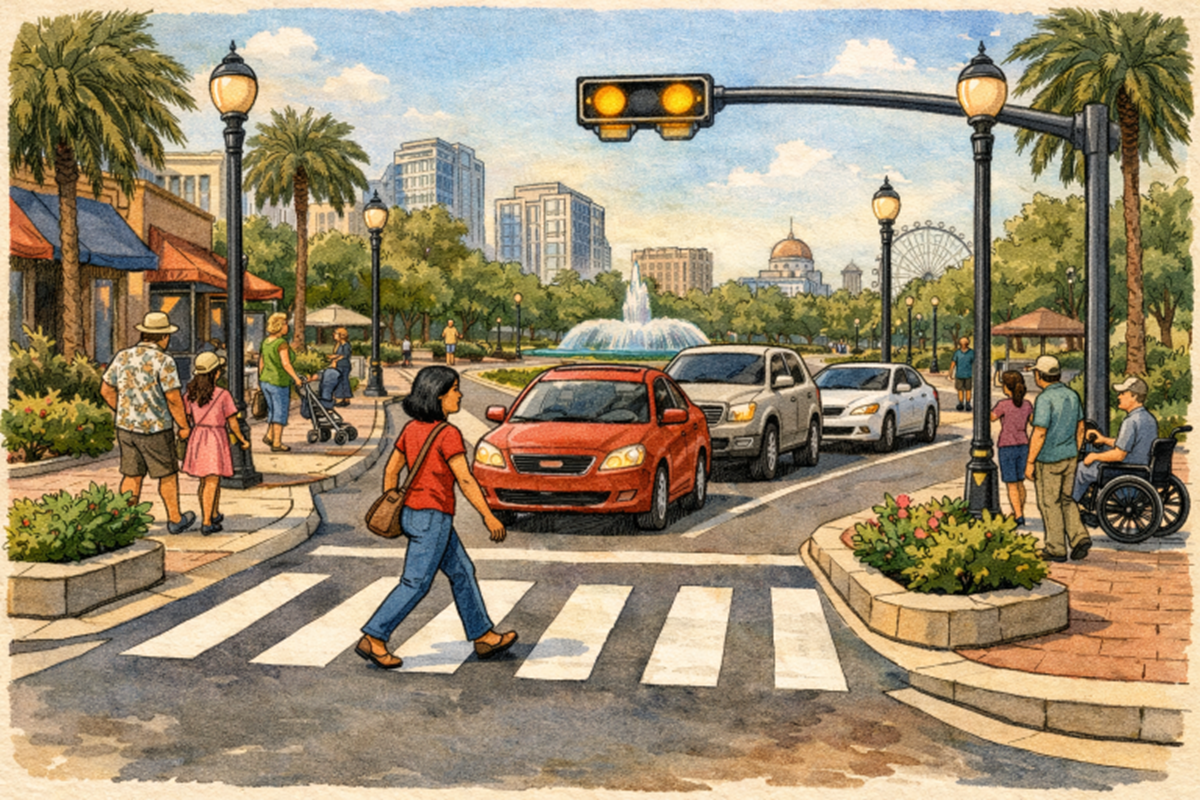
Key infrastructure upgrades include newly designed high-visibility crosswalks, curb extensions, and pedestrian refuge islands. These changes are designed to slow traffic, protect pedestrians, and encourage drivers to adopt safer habits. For example, a crosswalk proposed at Mills Avenue and Canton Street in the active Mills 50 District includes flashing pedestrian beacons and extended curbs. These additions aim to reduce accident rates and make busy crossings safer.
The city has recently installed pedestrian-activated signals and enhanced street lighting in high-risk zones. According to the Federal Highway Administration, such improvements have been shown to reduce pedestrian crashes by up to 47 percent in similar urban areas. These physical changes not only increase visibility but also direct the flow of both drivers and pedestrians more intuitively.
Community Engagement and Education
Community participation is a vital aspect of sustainable road safety. Orlando actively involves residents through public forums, open houses, and surveys that let people share their experiences and provide feedback on proposed changes. This open dialogue helps ensure new projects address the most pressing community concerns and empowers residents to become advocates for safer streets.
The city has also rolled out education campaigns led by both the local government and law enforcement. These initiatives teach both drivers and pedestrians about proper road etiquette and highlight the most common risk factors for accidents. Outreach includes school visits, media campaigns, and partnerships with local organizations, raising awareness of everyone’s role in preventing collisions and injuries.
Comparative Analysis with Other Cities
Orlando’s initiatives gain further context when compared with those of other metropolitan areas. Tampa Bay, for instance, has faced a troubling statistic, ranking among the deadliest metro regions nationwide for pedestrian fatalities. Between 2017 and 2022, 618 pedestrians lost their lives, underscoring the critical need for ongoing safety reforms there. Orlando’s outcomes, while not perfect, showcase improvement thanks to data-driven interventions and a willingness to innovate.
Other cities have started adopting pieces of Orlando’s model, such as quick-build safety projects and public engagement forums. Looking at broader trends documented by the National Highway Traffic Safety Administration, Orlando’s pedestrian fatality rate has been on a more positive trajectory than some of its peers, suggesting that local strategies are yielding measurable results.
Challenges and Future Directions
While progress is clear, new obstacles continue to emerge. The city’s rapid population growth means more vehicles and more pedestrians navigating shared spaces. Construction projects and tourism add layers of complexity, requiring city officials, planners, and residents to remain agile in their responses.
Upcoming priorities for Orlando include a refresh of its Vision Zero Action Plan and development of a citywide Pedestrian Facilities Plan. The goal is to update policies to reflect recent infrastructure improvements, adapt to evolving travel patterns, and improve data collection to support better decision-making. These ongoing efforts aim to maintain a downward trend in accidents and foster a lasting culture of safety on Orlando’s roads.
In addition to infrastructure and policy efforts, collaborations with advocacy groups and research institutions expand resources for long-term solutions. Many local organizations, such as neighborhood associations and pedestrian advocacy groups, work closely with the city to pilot solutions, including community-led traffic calming zones and pedestrian safety workshops. As part of these collaborations, universities provide valuable research and data analysis that underpin new policy recommendations. These partnerships help identify patterns, evaluate results, and offer innovative perspectives to future projects.
Orlando is also looking at strengthening its integration of smart technologies into traffic management. Implementation of real-time data monitoring, smart traffic signal systems, and automated enforcement technologies is being discussed and tested. These efforts are designed not only to reduce accidents but also to enhance the efficiency of emergency response and traffic flow throughout the city. With ongoing technology investments and evolving partnerships, there is a concerted effort to develop a robust, adaptive, and inclusive approach to street safety that benefits both residents and visitors.
Conclusion
Orlando’s comprehensive approach to road safety is transforming the city into a model of how urban centers can respond to growing demands on their transportation networks. Through investment in infrastructure, continuous community engagement, and an openness to learning from other regions, Orlando demonstrates a strong commitment to protecting all road users. Ongoing evaluation and a readiness to act on new challenges indicate a promising future for anyone living in or visiting the city.