The Transformative Power of Virtual Simulations in Professional Skills Development
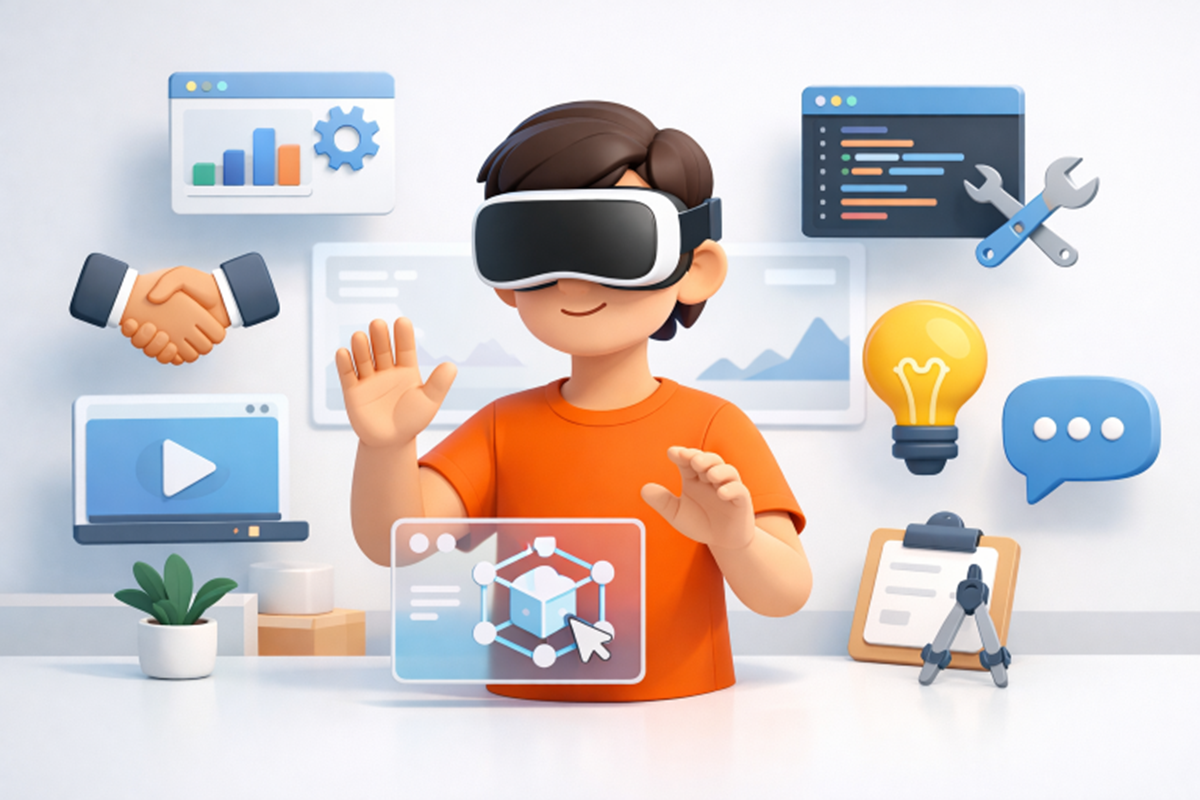
Table of Contents
- Accelerating Learning Through Immersion
- Enhancing Soft Skills with Realistic Scenarios
- Bridging the Gap in Technical Training
- Cost-Effective and Scalable Training Solutions
- Improving Safety and Reducing Risk
- Personalized Learning Experiences
- Future Trends in Virtual Simulations
- Conclusion
In today’s fast-paced working world, businesses and individuals alike are searching for more effective ways to develop essential skills. Traditional training methods often fail to fully prepare learners for the complex environments they face in modern workplaces. Leveraging technology, virtual assessment center, and immersive simulations is emerging as a groundbreaking approach that makes professional development more impactful and engaging.
Virtual simulations are more than just animated tutorials. They replicate job scenarios and real-world challenges, giving professionals the chance to learn by doing within a safe, structured environment. This active learning approach has quickly gained traction as organizations seek scalable, adaptable, and cost-effective training solutions that boost employee retention and confidence.
From enhancing soft skills to bridging technical knowledge gaps and improving overall safety, virtual simulations have proven their value in diverse sectors. As these simulations become more sophisticated, they are fundamentally changing how organizations train teams and approach workforce development.
This article explores the key ways virtual simulations revolutionize training and professional development, highlighting their benefits for both learners and organizations.
Accelerating Learning Through Immersion
One of the most profound advantages of virtual simulations is their immersive quality. By replicating real-world situations in detail, these tools promote active engagement from learners. Instead of passively consuming content, learners must make choices, solve problems, and witness the outcomes in real time. Research published by Forbes shows that immersive experiences can lead to faster skill acquisition and greater long-term retention than conventional training.
Furthermore, the flexibility of virtual simulations allows learning to occur in a variety of settings, such as remote workspaces or distributed teams, and at times that are most convenient for learners. This means businesses can upskill employees without disrupting daily workflows, making staff development more efficient and adaptable. Immersive simulations also benefit from repeatability; participants can revisit scenarios, refine their approaches, and gain deeper insight with each attempt. This continuous feedback loop accelerates mastery and supports a culture of ongoing improvement within teams, which is key in today’s rapidly changing work environments.
Enhancing Soft Skills with Realistic Scenarios
Critical soft skills such as communication, empathy, and teamwork are essential for success in any profession. Virtual simulations help users develop these abilities in a safe and feedback-rich environment. For example, in healthcare education, aspiring nurses and doctors can role-play high-stakes interactions and receive pinpoint feedback on their performance. According to VCU News, these realistic simulations significantly improve learners’ performance, preparing them for the intricacies of real clinical settings.
Beyond healthcare, industries such as retail, customer service, and hospitality have embraced virtual environments to develop interpersonal skills that are difficult to practice in typical classroom settings. For example, a retail employee might interact with a simulated customer to practice conflict resolution strategies or active listening. Managers can also build leadership skills through challenging, real-world dilemmas in simulated boardrooms. These experiential exercises offer immediate, actionable feedback, so skills are refined much faster than through lectures or theory alone.
Bridging the Gap in Technical Training
Technical knowledge often requires practical application that classrooms or lectures cannot fully provide. Virtual simulations offer an interactive space where trainees can practice operating machinery, troubleshooting issues, or exploring complex concepts without real-world risks. The Massachusetts Institute of Technology (MIT) developed remote photonics labs to give engineering students hands-on experience in a digital environment, ensuring they are job-ready upon graduation. More on MIT’s simulation approach can be found on the MIT Reconfigurable Photonics Lab website.
In addition to improving proficiency, simulations integrate the latest industry standards and protocols, which keep learning relevant to current workplace needs. Tools that mimic actual equipment interfaces or software environments let learners become familiar with the real thing before ever touching it. Particularly in industries such as manufacturing, energy, and aviation, this practice dramatically reduces the risk of costly errors. This access to state-of-the-art training ensures that technical skill sets remain sharp and can evolve with industry innovations. Companies also benefit from swift onboarding for new hires and easier adaptation to equipment upgrades or process changes, thereby maximizing workforce agility.
Cost-Effective and Scalable Training Solutions
As organizations grow, traditional in-person training can become expensive and logistically complicated. Virtual simulations eliminate many of these barriers. They scale easily to accommodate hundreds or thousands of learners and eliminate recurring costs for physical setups, travel, or printed material. Many leading businesses, as discussed in Forbes, are integrating these advanced simulations into onboarding, ongoing training, and leadership programs, saving time and money while improving results.
Improving Safety and Reducing Risk
Some industries involve high-risk tasks that can cause injuries or significant financial losses. Virtual simulations allow workers to practice emergency procedures, hazardous repairs, or equipment operation in a safe, risk-free environment. According to Virginia Tech News, utility companies are using digital twins and VR to better prepare their workforce, reducing incidents and elevating safety standards across the board.
Personalized Learning Experiences
Unlike rigid, one-size-fits-all programs, virtual simulations can tailor the pace and style of learning to individual needs. By adapting scenarios to a learner’s progress and offering targeted feedback, simulations help learners overcome challenges and maximize personal growth. This customization leads to greater engagement, lower dropout rates, and better long-term outcomes for both organizations and professionals.
The inclusion of dynamic branching pathways in simulations means no two learners will have identical experiences. This diversity of encounters cultivates adaptability and problem-solving skills that are essential in a constantly evolving work environment. By drawing from real data and predictive analytics, simulation platforms can assess competencies, recommend targeted modules, and even identify future leaders based on user performance patterns. This not only personalizes training but also provides organizations with actionable insights to guide workforce development strategies in real time.
Future Trends in Virtual Simulations
Advancements in artificial intelligence and extended reality are paving the way for the next generation of training. Preparing their workforce better with AI makes these platforms even more adaptive and responsive, while new XR technologies remove many of the remaining barriers to remote workforce training. As noted by The New York Times, these innovations are helping organizations deliver equitable, on-demand training regardless of geography or background, opening new opportunities for upskilling worldwide.
Conclusion
Virtual simulations are driving a major shift in how skills are acquired and refined in the professional world. By making training immersive, scalable, and accessible, they not only improve retention and confidence but also prepare workers for evolving job demands. As technology continues to develop, the potential of virtual simulations to support lifelong learning and workforce development will only grow. Organizations that invest in these tools are better positioned to succeed in the digital economy and empower their talent for the future.