Beyond Boxes: Exploring the World’s Most Unconventional Building Designs
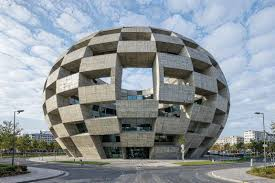
Architecture has always reflected the values, technology, and imagination of its time. For centuries, buildings followed predictable forms—straight walls, right angles, and repetitive layouts. But in recent decades, a new wave of design thinking has shattered those conventions. Today, architecture is no longer confined to “boxes.” Instead, it has become a playground for creativity, engineering innovation, and bold artistic expression.
Breaking Free from Traditional Shapes
Unconventional architecture often begins with a simple question: what if buildings didn’t have to be rectangular? This idea has led to structures that curve, tilt, spiral, and even appear to float. Architects are increasingly drawing inspiration from natural forms like waves, shells, and trees, resulting in buildings that feel alive rather than static.
One striking example is organic architecture, where structures mimic natural systems. These designs don’t just imitate nature aesthetically—they also respond to environmental conditions like light, airflow, and temperature. The result is buildings that are not only visually stunning but also highly functional and sustainable.
Engineering the Impossible
Behind every unusual building is a story of engineering innovation. Complex shapes require advanced materials and precise structural calculations. In many cases, modern digital modeling tools make it possible to design forms that would have been impossible to build just a few decades ago.
Specialized components such as custom metal brackets often play a crucial role in bringing these ambitious designs to life. They provide the flexibility and strength needed to support irregular angles, curved surfaces, and unconventional load distributions. Without such innovations, many of today’s architectural icons would remain only theoretical concepts.
Buildings That Challenge Gravity
Some of the world’s most fascinating structures appear to defy gravity itself. Leaning towers, cantilevered homes, and inverted buildings push the boundaries of what we expect from construction. These designs are not just artistic statements—they are carefully engineered systems that redistribute weight in surprising ways.
For example, cantilevered structures extend far beyond their base supports, creating dramatic overhangs that seem impossible at first glance. Meanwhile, twisted skyscrapers use rotational geometry to reduce wind resistance while producing visually dynamic silhouettes.
Architecture Inspired by Nature and Movement
Nature remains one of the most powerful sources of inspiration for architects. Buildings shaped like flowers, waves, and even geological formations are becoming more common in modern cities. These designs often blur the line between structure and sculpture.
In addition, movement is becoming a key influence. Some contemporary buildings are designed to rotate, shift, or adapt over time. This dynamic approach reflects a shift toward responsive architecture—spaces that evolve with their environment and users.
The Role of Technology in Design Innovation
Advanced software, 3D modeling, and parametric design tools have revolutionized architecture. Designers can now simulate stress points, airflow, and lighting conditions before a single brick is laid. This allows for greater experimentation with form while maintaining structural integrity.
Digital fabrication methods, including CNC machining and 3D printing, also enable the creation of complex components with extreme precision. These technologies have opened the door to architectural experimentation that was previously too costly or impractical.
Redefining Urban Skylines
Unconventional buildings are reshaping cities around the world. Skylines that once looked uniform and predictable are now becoming diverse and expressive. Each new structure adds personality and identity to its environment, turning cities into living galleries of design innovation.
However, these bold creations also raise important questions about practicality, cost, and sustainability. Architects must balance artistic ambition with real-world constraints such as energy efficiency, usability, and environmental impact.
The Future of Building Design
As technology continues to evolve, the possibilities for architecture are expanding rapidly. We are moving toward a future where buildings may adapt to climate conditions, shift their form based on usage, or even self-repair over time.
Unconventional design is no longer a niche—it is becoming a defining feature of modern architecture. By combining creativity, engineering, and materials science, architects are redefining what buildings can be.
In this evolving landscape, one thing is clear: the era of the box-shaped building is fading, replaced by a world where imagination sets the only limit.