How to Build an Effective MSP® Strategy for Long Term Success
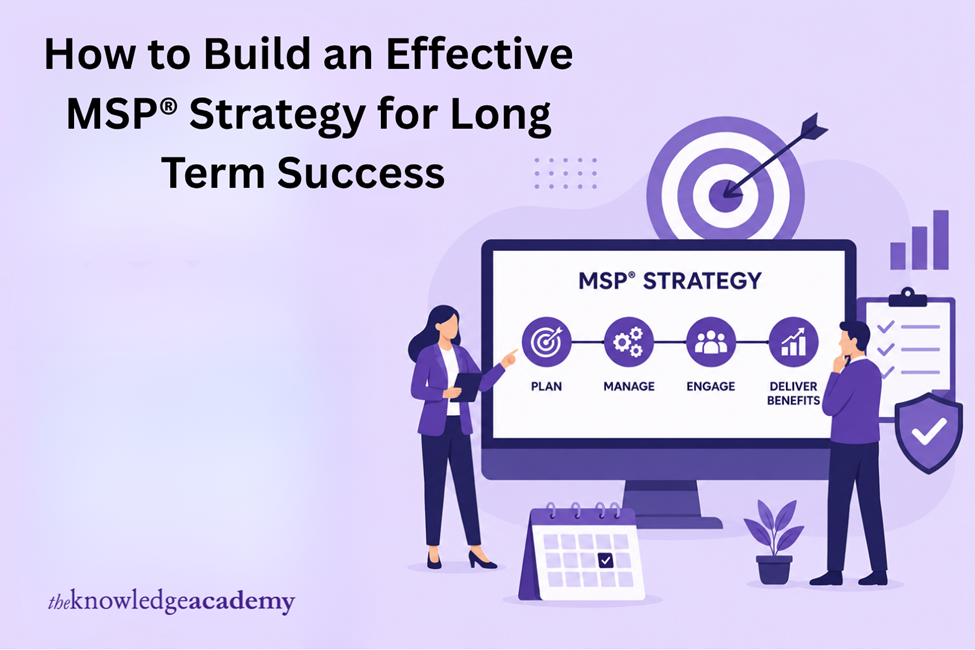
Have you noticed how some organisations manage change smoothly while others struggle to keep programmes aligned with business goals? MSP® Foundation and Practitioner helps professionals understand how successful programme management supports long term growth and strategic delivery. Many organisations also rely on MSP® Principles to improve governance and programme control. Building an effective MSP® strategy is not only about managing projects. It is about creating a clear direction that connects people and business outcomes. Professionals studying MSP® Foundation and Practitioner often develop a stronger understanding of how structured programme management supports business transformation and long term success.
In this blog, you will explore how to build an effective MSP® strategy for long term success.
Table of Contents
- Key Steps to Build an Effective MSP® Strategy
- Conclusion
Key Steps to Build an Effective MSP® Strategy
The following are crucial steps that companies should take in order to develop an effective MSP® plan for sustained company success:
Define Clear Programme Objectives
Every effective MSP® approach begins with well-defined goals. Before beginning any programme, organisations must decide what they hope to accomplish.
Teams are better able to maintain focus during programme delivery when they have clear goals. Instead of focusing on specific departmental goals, these objectives ought to complement broader corporate ambitions.
Making decisions is made easier when goals are clearly stated. Teams can avoid wasting time on tasks that don’t contribute to the success of the programme and assess progress more precisely. To guarantee that programme objectives stay in line with business outcomes, several companies employ MSP® Principles.
Align Programmes with Business Goals
Long-term organisational objectives should always be supported by an MSP® strategy. Programmes that function independently of corporate priorities frequently fall short of producing significant outcomes.
Programmes continued alignment with evolving business needs must be routinely assessed by leaders. Customer expectations and market conditions can all change over time.
Organisations can preserve departmental uniformity with the use of alignment. Additionally, it guarantees that resources are employed efficiently to promote expansion and operational enhancement. Programme Managers can enhance strategic alignment across several company functions with the knowledge acquired through MSP® Foundation and Practitioner.
Build Strong Governance Structures
The success of programme management is significantly influenced by governance. Programmes can soon become challenging to manage without enough supervision.
Organisations can monitor progress and uphold accountability with the support of robust governance structures. Transparency among teams and stakeholders is also enhanced by clear reporting systems.
Decision-makers should clearly define the roles and responsibilities of management teams, sponsors, and programme leaders. Throughout the course of the programme, this lessens misunderstandings and enhances communication. Organisations that adhere to the MSP® Principles frequently develop more robust reporting and governance frameworks.
Focus on Stakeholder Engagement
Programme success is influenced by stakeholders in a variety of ways. Senior leaders, suppliers, customers, and employees all have significant roles to play in the implementation of the programme.
Organisations can obtain support for programme initiatives through strong stakeholder involvement. Additionally, it lessens resistance to change and enhances communication.
Throughout the process, programme leaders should keep stakeholders updated. Frequent updates promote cooperation and foster confidence between teams and departments.
Manage Risks Early
There is some danger associated with every programme. If risks are disregarded, delivery may be impacted by delays and shifting priorities.
Early risk identification and well-defined reaction plans are hallmarks of successful organisations. Over time, this lessens interruptions and increases programme stability.
Problems should not be the main focus of risk management. Additionally, organisations should look for ways to add value or enhance programme outcomes.
Create a Flexible Delivery Approach
Business environments are still evolving quickly. When objectives change, organisations that adhere to strict programme structures may find it difficult to adjust.
Teams can adapt to change more successfully when they have a flexible MSP® plan. This keeps programmes current even as market conditions change.
Additionally, flexibility fosters creativity. When programme structures allow for improvement and modification, teams feel more comfortable testing new concepts. Professionals with MSP® Foundation and Practitioner expertise frequently comprehend how flexibility enhances long-term programme delivery.
Invest in Leadership and Communication
The success of a programme depends on strong leadership. Throughout delivery, programme leaders lead teams, overcome obstacles, and have a strategic focus.
Smoother programme management is also facilitated by effective communication. When expectations, roles, and updates are communicated clearly, teams function more efficiently.
Open communication between departments should be promoted by leaders. This enhances teamwork and assists businesses in resolving problems before they become more serious ones.
Track Progress and Measure Success
Programmes cannot be improved by organisations if performance is not measured. Leaders can determine whether programmes are producing the desired results by keeping an eye on their progress.
Both immediate progress and long-term business impact should be the main emphasis of performance appraisals. This gives a more comprehensive view of the success of the programme.
Organisations can find areas for improvement by conducting regular evaluations. Sustainable growth is supported and future programme delivery is strengthened by ongoing learning. Organisations can enhance programme evaluations and performance tracking by regularly implementing the MSP® Principles.
Encourage Continuous Improvement
Continuous improvement is necessary for long-term success. Programme procedures and operational effectiveness should all be routinely reviewed by organisations.
Businesses may remain flexible and competitive by continuously improving. When teams are aware that their input leads to constructive change, they become more self-assured.
Instead of viewing programme management as a one-time event, successful organisations view it as a dynamic process. This way of thinking fosters future business growth and produces better long-term outcomes.
Conclusion
Building a successful MSP® strategy requires clear goals and effective communication. Organisations that apply MSP® Principles successfully often improve programme delivery and long term business performance. A well structured strategy helps teams stay aligned with organisational priorities while managing change more confidently. Professionals looking to strengthen their programme management knowledge through MSP® Foundation and Practitioner can improve their ability to manage strategic change effectively. The Knowledge Academy, a global training provider, offers valuable learning opportunities to support long term career and organisational success.